Softcover photo books vs magazines
Tags
Interested in joining the world's leading print on demand platform?
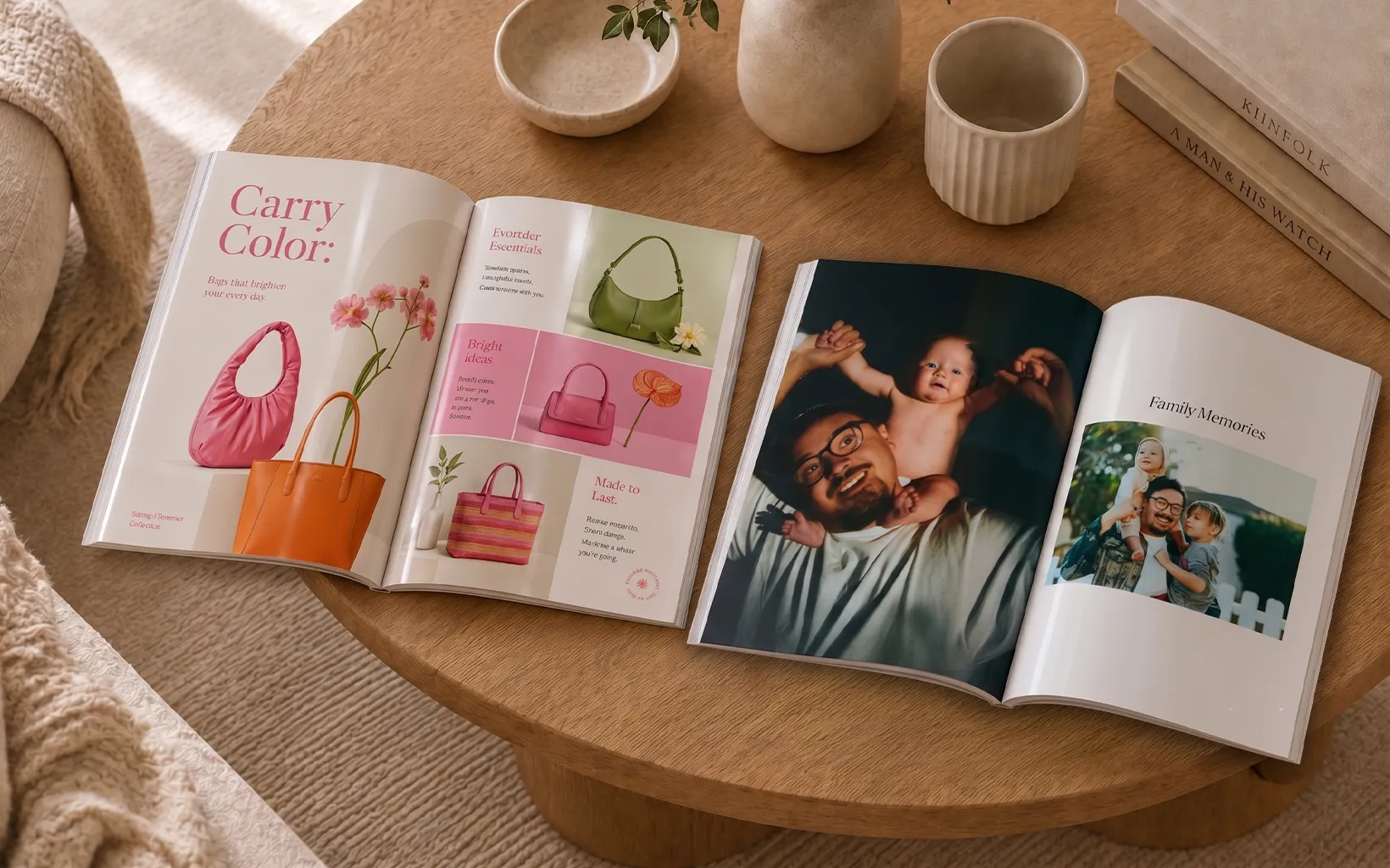
If you're deciding how to turn a set of images into a printed product, you've probably landed on two strong contenders: softcover photo books and magazines. On the surface, they look almost identical. Both have a soft, flexible cover you can bend and flip through; both use the same PUR binding for a neat, squared spine; both are printed in full colour on premium paper; and both work brilliantly as custom keepsakes or sellable products.
That similarity is exactly why sellers get stuck choosing between them. Pick up a softcover photo book and a magazine side by side, and it's not always obvious which one to list — or which one your customer actually needs. The real difference is what they're built for. A photo book is designed around showcasing photography at its best, while a magazine is designed around flexible, longer-form content that needs to look and feel like a publication.
In this post, we'll break down what softcover photo books and magazines actually are, how they differ, and how to decide which one fits your end use — whether that's a travel photo book, a lookbook, or a full editorial publication.
What is a softcover photo book?
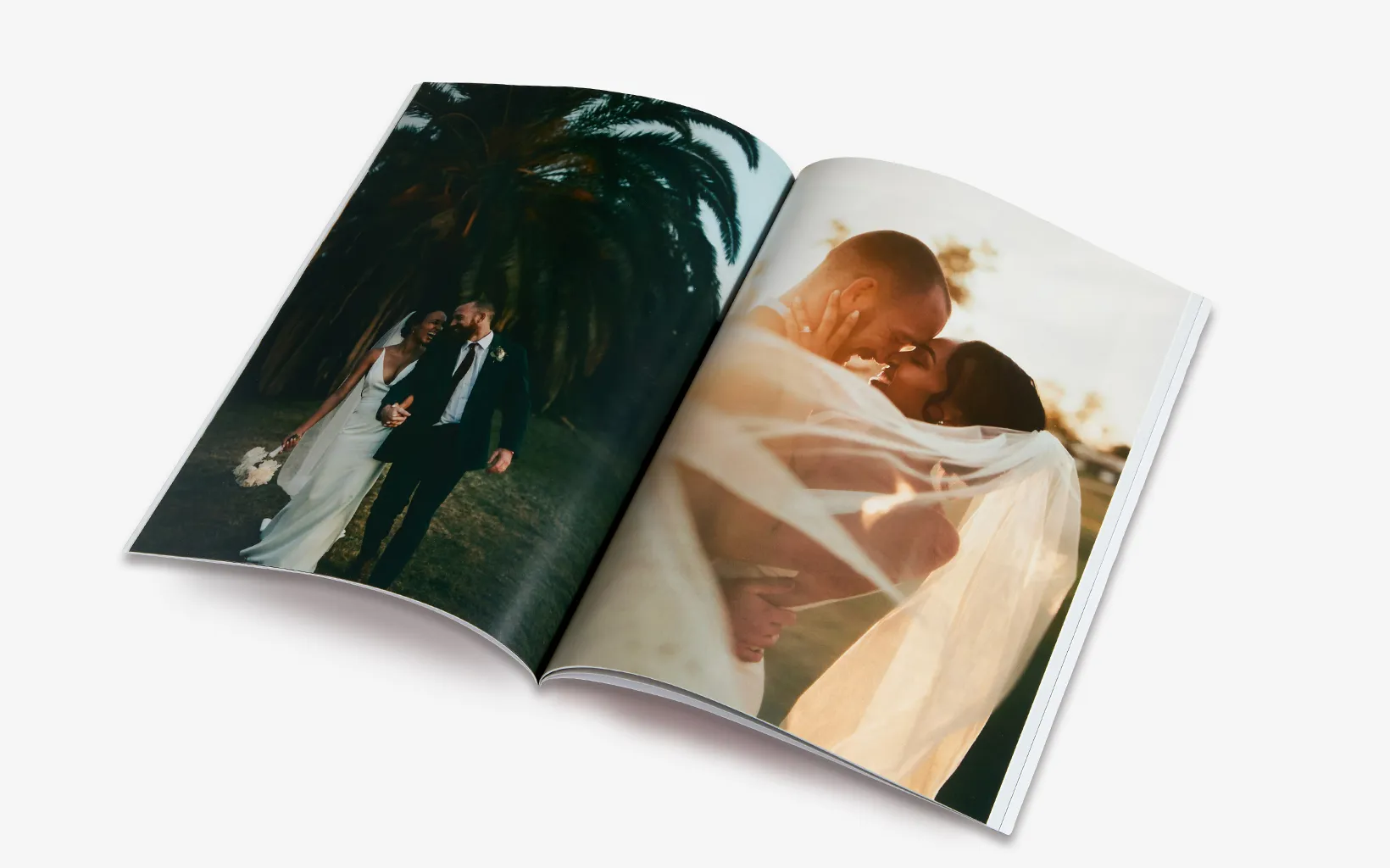
A softcover photo book is a flexible, lightweight book with a matte-laminate cover and a squared, printable spine. It's designed specifically around photography — think wedding albums, travel photo books, family photo books, or portfolio-style keepsakes.
Key features of a softcover photo book include:
- Matte-laminate softcover
- 20–300 pages
- 120gsm (uncoated) or 150gsm (gloss) paper
- PUR binding for a strong, squared spine
- Available sizes: Square (210x210mm), A5 Portrait (150x210mm), A5 Landscape (210x150mm), A4 Portrait (210x300mm)
Photo books are built to make images the focus — rich colour, crisp detail, and a page weight that holds up well to flipping through again and again. The 120–150gsm paper is noticeably heavier and more substantial than the 115gsm stock used in a magazine, which is what gives a photo book its "proper book" feel in the hand rather than the lighter, more magazine-like page turn.
Order a sample Create photo book
What is a magazine?
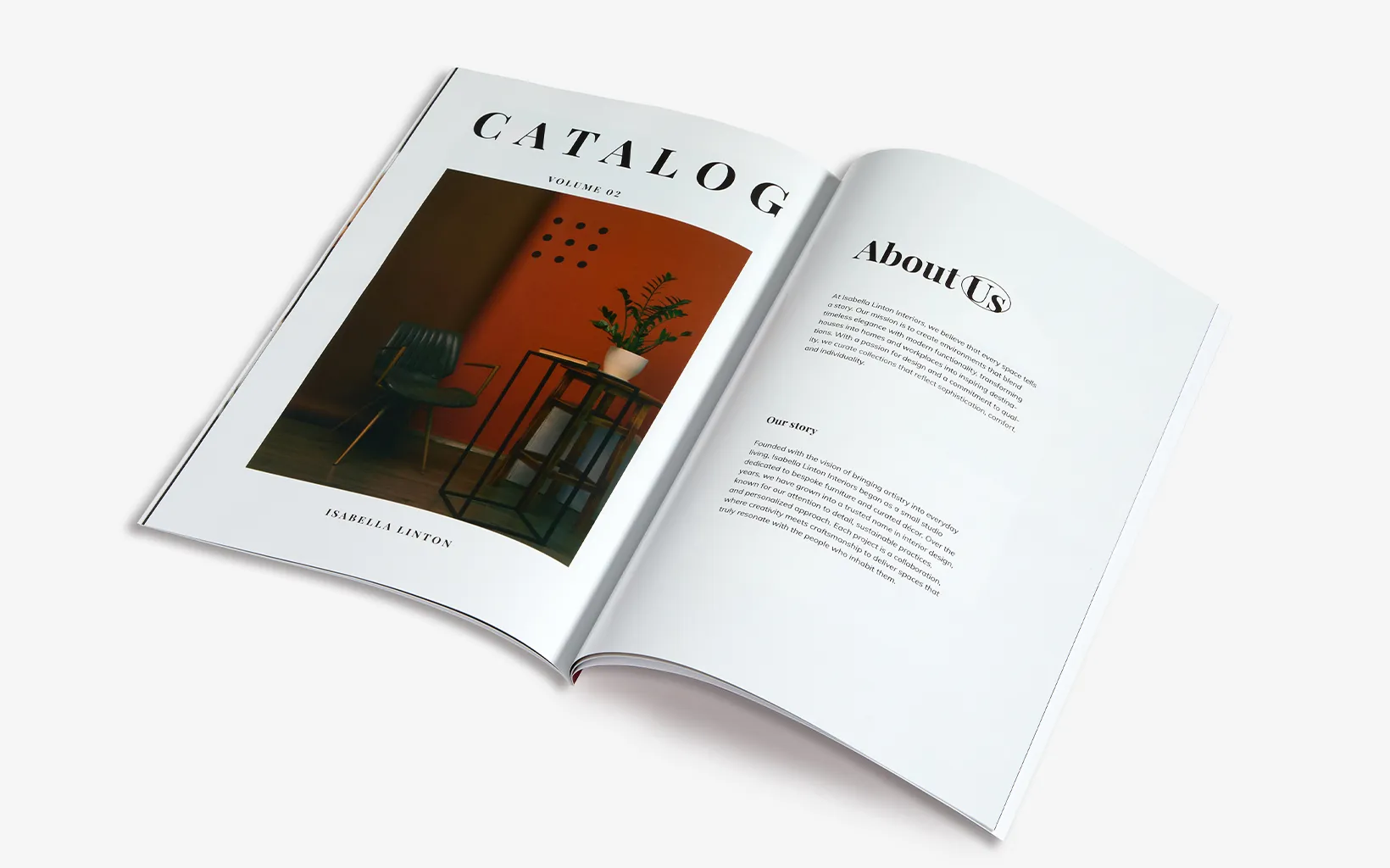
Magazines, by contrast, are designed with editorial and publishing use in mind — lookbooks, catalogues, zines, journals, or branded publications. They share some of the same DNA as photo books, but lean further into flexibility of format and page count — helped by a lighter, 115gsm paper stock — creating room for much longer publications.
Key features of a magazine include:
- 250gsm laminated softcover with a matte or gloss finish
- 20–500 pages
- 115gsm silk-coated interior paper
- PUR binding for a strong, squared spine
- Available sizes: A5 Portrait (148x210mm), A5 Landscape (210x148mm), A4 Portrait (210x297mm), A4 Landscape (297x210mm), Letter Portrait (216x279mm)
The interior pages of our magazines are noticeably lighter at 115gsm, versus the 120–150gsm used inside a photo book. That's a deliberate trade-off, not a downgrade: lighter paper keeps a 500-page publication manageable to hold and flick through, and keeps costs sensible for longer print runs, whereas a photo book's heavier stock is what makes individual images feel weighty and premium at a shorter, 300-page maximum.
Order a sample Create magazine
The importance of paper weight
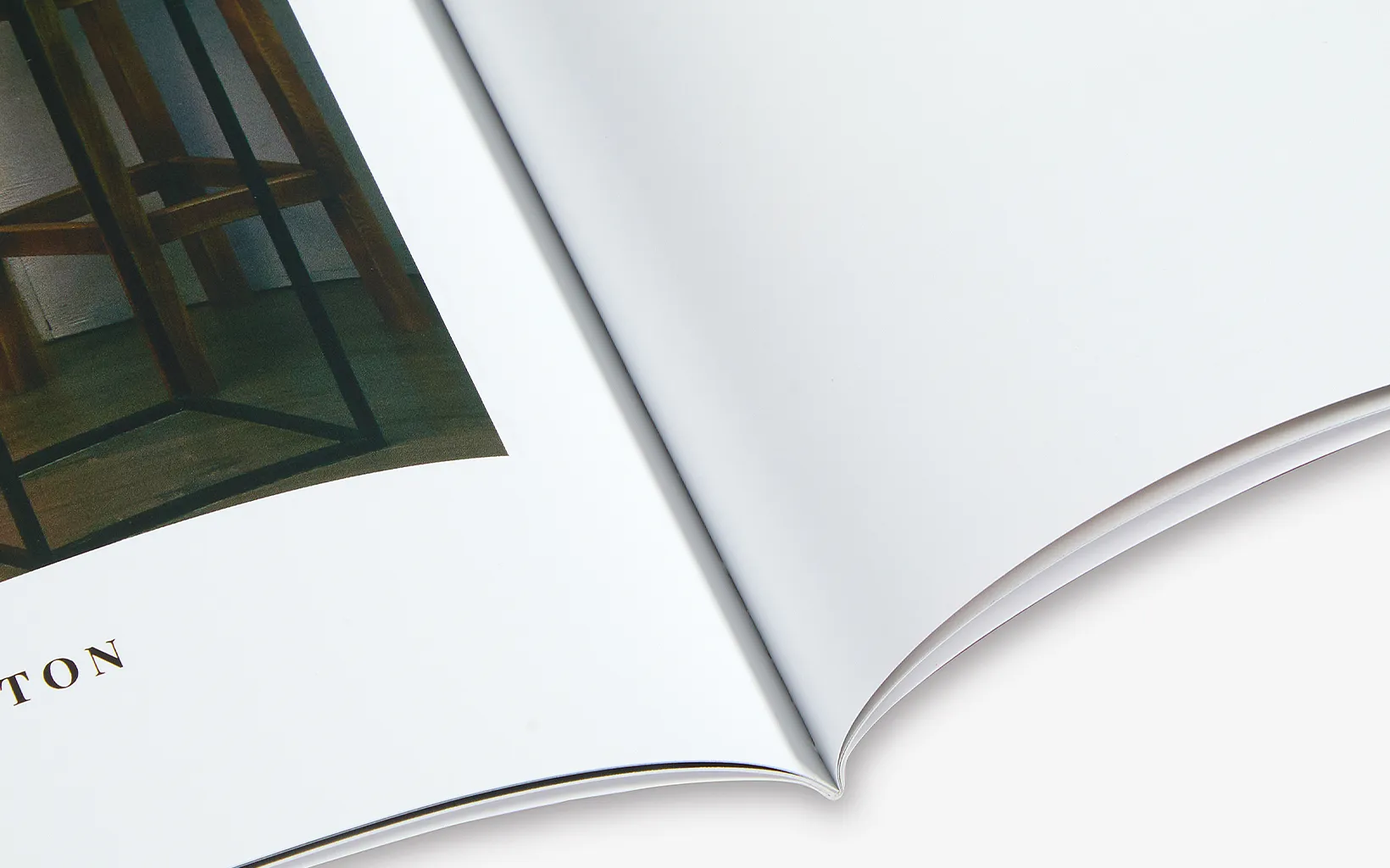
If you only remember one distinction between these two products, make it this one. A softcover photo book uses 120gsm or 150gsm paper — genuinely heavier, photographic-grade stock chosen to make colour and detail pop on every page. A magazine uses 115gsm silk-coated paper — lighter by design, keeping a much longer document manageable.
In practice, that means a photo book will always feel thicker and more substantial page-for-page than a magazine, even at the same page count, because the paper itself is doing more work. If your priority is showcasing photography — a wedding, a portfolio, a travel photo book — that heavier paper gives your images the impact they deserve. If your priority is fitting in more content, more pages, or a lower-cost format at scale, the magazine's lighter paper is the better trade-off.
Softcover photo books vs magazines: The key differences
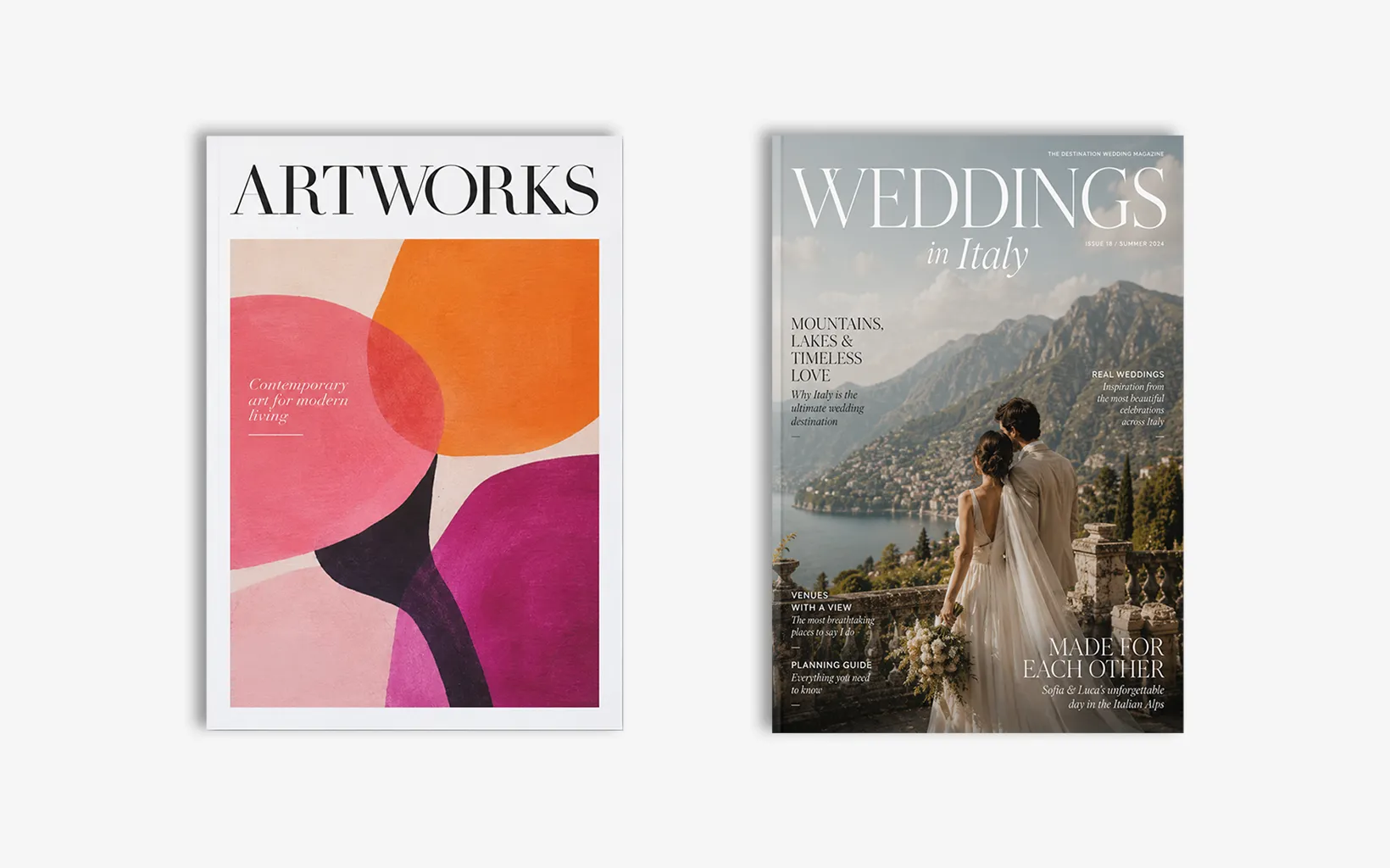
At a glance, the two products are more similar than different — both use PUR binding, both are printed digitally in full colour, and both can be ordered as custom, one-off products or produced at scale. The real differences come down to purpose, paper, and page count.
| Softcover photo book | Magazine | |
|---|---|---|
| Cover | Matte-laminate | Matte or gloss |
| Interior paper | 120gsm (uncoated) or 150gsm (gloss) | 115gsm silk-coated |
| Page count | 20–300 pages | 20–500 pages |
| Binding | PUR binding | PUR binding |
| Sizes | A5, A4, Square | A5, A4, Letter |
| Orientation | Portrait, landscape, square | Portrait, landscape |
| Best suited for | Travel photo books, wedding albums, family albums, photography portfolios | Lookbooks, catalogues, zines, recurring publications |
Cover
A softcover photo book uses a matte-laminate cover as standard. A magazine gives you the choice of matte or gloss, which matters if you're going for a newsstand-style, glossy finish versus a softer, more tactile matte look.
Interior paper
As covered above, this is the biggest differentiator: 120–150gsm photographic stock for softcover photo books versus 115gsm silk-coated paper for magazines. That gap is what allows magazines to stretch to 500 pages while the photo books cap out at 300.
Page count
Softcover photo books run from 20 up to 300 pages. Magazines stretch further, from 20 up to 500 pages, making them the better option if you're creating something with a lot of content or multiple double-page spreads.
Binding
Both products use the same PUR binding — a polyurethane adhesive that cures stronger and more flexible than standard glue, letting pages open flat without coming loose. It's also what gives both a clean, squared spine.
Sizes
Softcover photo books are available in A5, A4 and Square formats. Magazines cover the same A5 and A4 range, plus a Letter size option — useful if you're printing for a US audience. Both offer portrait and landscape orientations too, so you're not locked into one layout either way.
Best suited for
Photo books work best for personal or gift-led projects: a travel photo book, a family album, a wedding book, or a portfolio. Magazines suit editorial, retail, or branded content: catalogues, lookbooks, zines, and recurring publications.
Which should you choose?
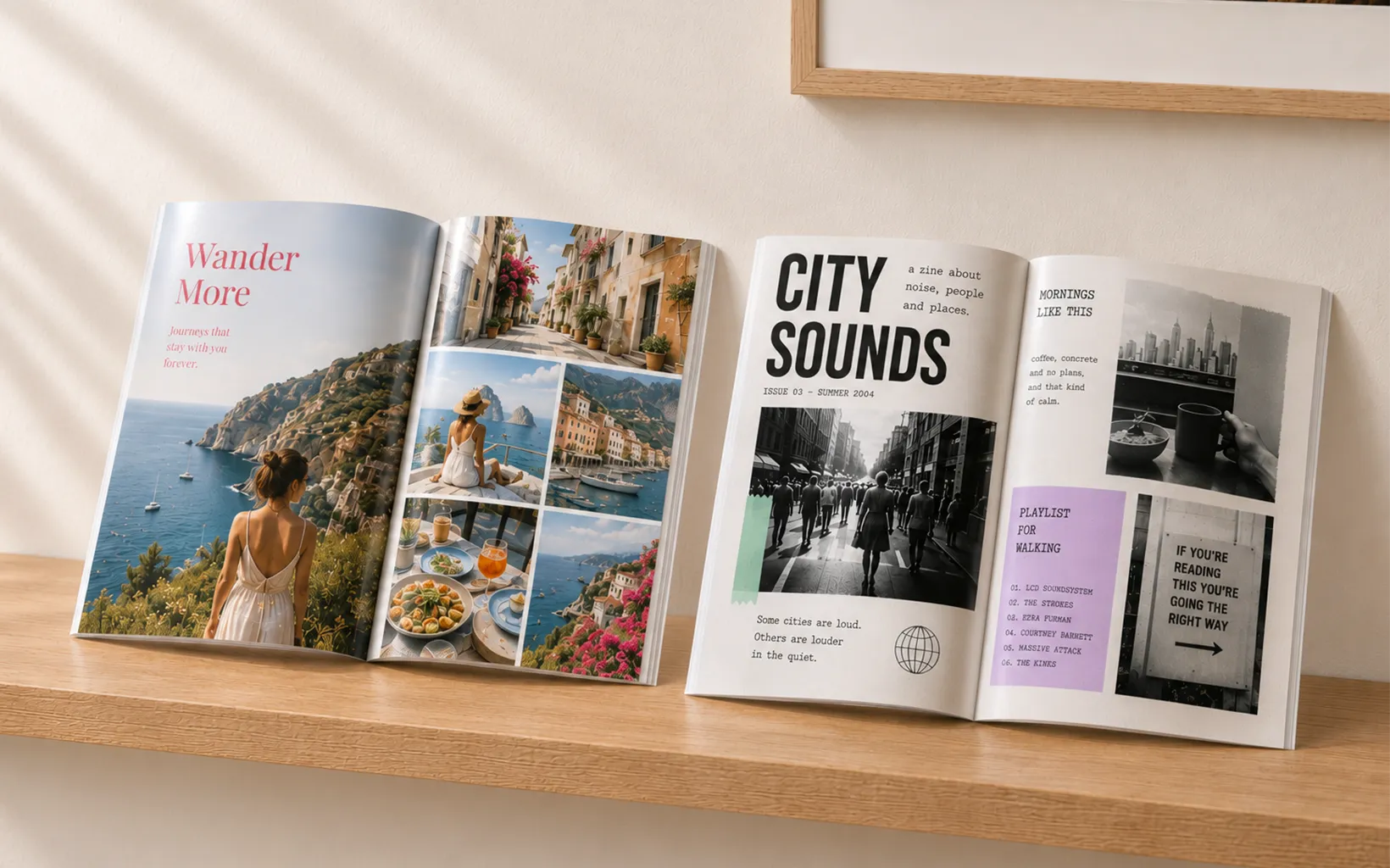
If your priority is photography — travel shots, portraits, weddings, or any project where image quality and paper weight matter most — a softcover photo book is the better fit. If you're working on something with more pages, editorial content, or a look that leans glossy and newsstand-ready, a magazine gives you that flexibility.
Either way, both products support global print on demand fulfilment and dropshipping, so you can create photo books online or print a magazine without ever touching a print run yourself. There's no inventory to hold and no minimum order quantities, so whichever product fits your project, you can start selling as soon as your files are ready.
Ready to get started? Sign up for your free Prodigi account and order a sample to see the Prodigi difference.
Products in this article
Further reading
-
Choosing the best fine art paper for your print
24 July 2018
-
How to create professional mockups for your print on demand products
23 October 2023
-
Custom t-shirt dropshipped essentials…are you stocking?
4 September 2020
-
Same day before midday
5 July 2021